
Container prices remain firm in Week 45, but the market is not seeing an across-the-board increase. New containers, used equipment and rental markets are moving differently, with availability varying by container type, location and delivery date.
While blank sailings and softer demand continue to influence freight rates, container purchase prices tell a more fragmented story.
HYSUN’s View: A Supply Mismatch, Not a Universal Shortage
The main issue is not an overall lack of containers. It is a mismatch between production schedules, equipment types and regional availability.
Three trends stand out:
- New container prices remain supported by committed production capacity.
- Used container prices are broadly stable, with differences between locations and sizes.
- Container rental demand is stronger on selected routes rather than across the whole market.
New container deliveries in November could ease some local shortages, although the impact will depend on where the equipment becomes available.
New Containers: Production Commitments Support Prices
According to CIMC’s investor-relations disclosures, production orders extend into November, while prices have improved month on month.
This firmness appears to reflect supply constraints more than a surge in buying demand. Committed production schedules and steel costs support factory quotations, reducing the incentive to discount.
Firm new container prices should therefore not automatically be interpreted as evidence of accelerating demand.
Used Containers: Broadly Stable, With Local Exceptions
Data from 箱约热点 for the first week of November indicates that prices for most container types in most regions showed no significant weekly change. Some locations recorded declines, including used 20GP containers in Zhengzhou.
The 40HQ price index rose just 0.16% week on week, while the 20GP index fell 0.38%. These movements point to a broadly stable market rather than widespread price increases.
Selected locations are experiencing tighter 40HQ availability, supporting modest price gains. That does not mean every container type at every port is becoming more expensive.
Container Rental: Stronger Demand on Selected Routes
Rental demand remains relatively concentrated on routes serving Russia and Central Asia. Domestic short-term rentals for general cargo have not experienced the same broad upward pressure.
Rental conditions are therefore route-specific and depend on the intended use, equipment availability and rental period.
What Container Buyers Should Consider
For cargo-worthy 40HQ containers at key ports, HYSUN recommends securing equipment seven to ten days before it is needed.
Used container budgets should be based on quotations for the actual pickup location and condition required—not an assumption that prices are rising everywhere.
Rental users may benefit from comparing short-term and flexible rental periods, then reviewing quotations as November deliveries reach the market.
Ultimately, availability depends on a practical question: can you secure the right container, at the right location, when you need it?
Sources: CIMC investor-relations disclosures, 箱约热点, Drewry, Clarksons and publicly available market quotations.
This report is for general information only and does not constitute purchasing or investment advice.
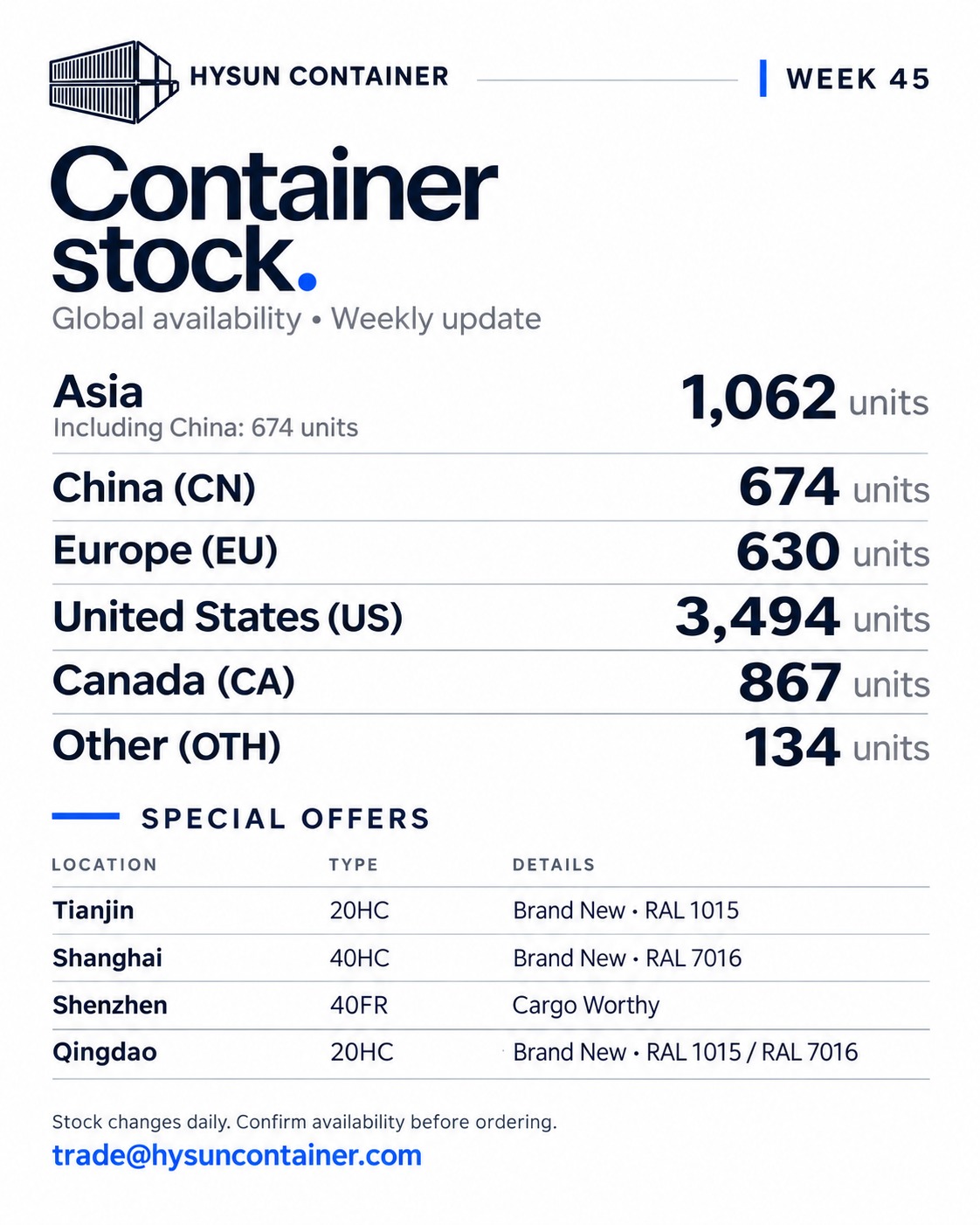
Hysun inventory in week 45: